

Table of Contents
- How to Spot Quality Gym Gear: The Inspection Checklist
- What to Look for When Buying Activewear: Fit, Support and Freedom of Movement
- Quality Activewear Fabric: Breathability, Moisture-Wicking and Quick-Drying Performance
- Gym Clothes Stitching and Construction: Seams, Stretch and the Squat Test
- How to Prevent Fabric Pilling on Gym Shirts: Durability Tests and Care
- Matching Gear to Your Workout: Tops, Bottoms and Layering
- Hands-On Garment Inspection Checklist and Cost Per Wear
- Conclusion: Build a Wardrobe of Quality Gym Gear That Lasts
- Frequently Asked Questions
Last Updated: October 15, 2026
How to Spot Quality Gym Gear: The Inspection Checklist
Most gym gear looks the same on a hanger but falls apart after ten washes. Spotting quality gym gear comes down to a few checks you can run in under a minute.
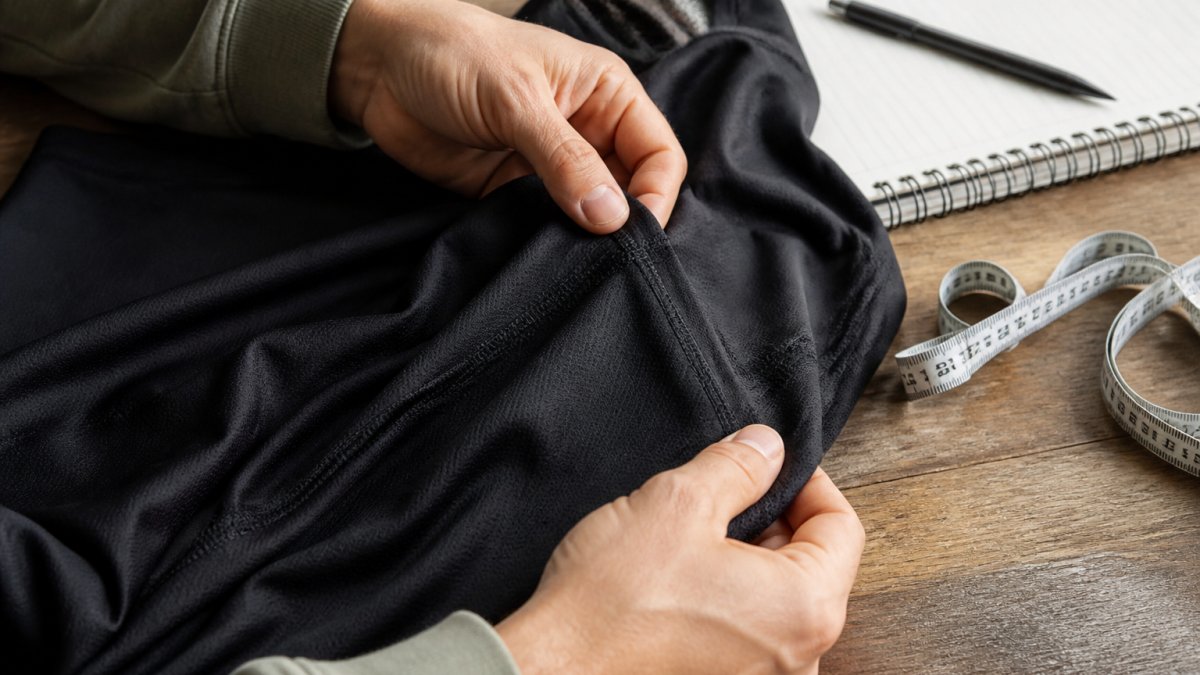
Quality gym gear is activewear built from durable, breathable fabric with flat seams, real stretch recovery, and construction that survives repeated washing and heavy training.
Quick Checks You Can Do in 60 Seconds
Run these five checks before you buy anything:
- Stretch test: Pull the fabric sideways and let go. It should snap back flat, not sag.
- Light test: Hold it up to a light. If you can see straight through, it will go thin fast.
- Seam check: Look inside. Flat seams or minimal seams mean less rubbing.
- Weight check: Heavier fabric drapes and holds shape better than thin, flimsy material.
- Label check: Look for clear fibre content and care instructions, not vague claims.
What to Look for When Buying Activewear: Fit, Support and Freedom of Movement
Fit is the first thing to get right. Good activewear hugs without pinching and lets you move through a full range of motion. If you can't squat, reach, or press without the fabric fighting you, it's the wrong size or cut.
Here's what to look for when buying activewear:
- Shoulders and chest: Fabric should sit flat, with no pulling across the back.
- Waist: Snug but not tight. You should fit a finger under the band.
- Hips and thighs: Room to squat without the fabric going see-through.
A common mistake is sizing down for a tighter look. That stretches the fabric past its limit and it never recovers. Support should come from the cut and fabric blend, not a smaller size.
Quality Activewear Fabric: Breathability, Moisture-Wicking and Quick-Drying Performance
Quality activewear fabric manages sweat, breathes, and dries fast: breathability lets heat escape, moisture-wicking moves sweat off your skin, and quick-drying releases that moisture. Fabric quality shows up after a workout, cheap fabric feels soft in the shop but turns clammy and heavy once you sweat, while good fabric stays light and dry.
Look for these markers:
- Four-way stretch: Moves in every direction, not just one.
- Fabric recovery: Springs back to shape after stretching.
- Weight: Mid-weight fabric holds shape better than thin material.
Synthetic vs Natural Fibres: Weighing the Pros and Cons
Both fibre types work; they suit different jobs.
Synthetic fibres (polyester, nylon, elastane)
- Pros: Fast-drying, strong, holds stretch, cheap to produce
- Cons: Can trap odour, feels less soft against skin, sheds microfibres
Natural fibres (cotton, bamboo)
- Pros: Soft, breathable, comfortable against skin
- Cons: Slower to dry, can lose shape without a stretch blend
The best gym gear often blends both: bamboo for breathability and softness, plus a small amount of Lycra for stretch and recovery.
Gym Clothes Stitching and Construction: Seams, Stretch and the Squat Test
Gym clothes stitching and construction decide whether a piece lasts months or years. Flat, minimal seams reduce chafing, strong stitching at stress points stops blowouts, and stretch panels let fabric move with you instead of tearing.
Check these spots, because this is where gear fails first:
- Side seams: Should be flat and even, with no loose threads.
- Crotch and underarm: High-stress areas. Look for reinforced stitching.
- Waistband: Should be wide and stitched down, not rolled or glued.
Then run the squat test. Squat deep in front of a mirror. The fabric should stretch, stay opaque, and spring back when you stand. If it goes sheer or stays stretched out, put it back.
How to Prevent Fabric Pilling on Gym Shirts: Durability Tests and Care
Pilling is the little balls of fibre that form after rubbing and washing. Loose-knit, short-staple fabric pills fast because fibres work to the surface and tangle; tightly knit, longer-staple fabric resists it. You can spot the difference before you buy and slow the process once you own it.
How to Assess Durability Before You Buy
You can't wash a garment in the shop, but you can look for signals that predict how it will age.
- Rub test: Rub the fabric against itself firmly for ten seconds. If fibres start to lift or fuzz immediately, it will pill quickly.
- Knit density: Hold the fabric up to the light. A dense, tight knit lets less light through than a loose one. Loose knits pill and snag more.
- Fibre content: Blends with a high proportion of short-staple cotton or low-grade polyester pill more than longer-staple fibres or a small amount of elastane. Check the percentages, not the marketing name.
Durability Tests You Can Run at Home
Once a garment is yours, track how it holds up with simple, repeatable checks.
- Pilling check: After each wash, look at the underarm, seat and inner thigh, the friction zones. Pills within the first few washes mean low-grade fabric.
- Shrinkage check: Measure a top or legging when new, then again after five washes. Natural-fibre-heavy blends shrink more than synthetic-dominant ones; more than a couple of centimetres means it will keep going.
- Stretch recovery check: Pull the waistband or cuff sideways and release. Slower return than when new means the elastane is degrading, usually from heat.
- Opacity check: Hold the garment to the light after several washes. Thinner and more see-through than when you bought it means the fabric is wearing out.
- Seam check: Look for pulled stitches, fraying thread or gaps at the crotch and underarm, the first places to fail.
- Colour check: Compare a washed garment against a new one of the same colour. Fading is normal over time, but rapid fading points to poor dye quality.
Care That Actually Extends Lifespan
How to prevent fabric pilling on gym shirts:
- Wash inside out to protect the outer surface from friction.
- Use cold water and a gentle cycle.
- Skip the dryer. Heat breaks down stretch fibres. Air dry instead.
- Wash with similar fabrics. Zips and velcro from other clothes snag and pill gym wear.
- Use a mesh laundry bag for delicates and blends.
- Use less detergent than you think you need. Residue attracts grit that abrades fibres.
- Avoid fabric softener. It coats performance fabrics and reduces wicking.
Durability is about more than pilling. Check for fading, stretched-out cuffs, and thinning fabric. Gear that holds its colour and shape after many washes is worth keeping.
Matching Gear to Your Workout: Tops, Bottoms and Layering
Different workouts need different gear. Heavy lifting needs support and stretch; a long run needs breathability and light weight. Matching gear to activity keeps you comfortable and stops unnecessary wear.
Use this as a starting point:
| Workout | Top | Bottom | Key feature |
|---|---|---|---|
| Heavy lifting | Fitted tee or tank | Shorts or leggings | Four-way stretch, support |
| Running | Lightweight tee | Running shorts | Breathable, quick-drying |
| Functional fitness | Tank or tee | Training shorts | Roomy fit, flat seams |
| Gym to street | Hoodie or tee | Joggers or leggings | Layering, clean look |
Tops: Fitted for lifting, looser for running. Look for breathable, quick-drying fabric. Bottoms: Leggings or shorts with four-way stretch and a wide waistband. Layering: A hoodie or base layer adds warmth without bulk.
Hands-On Garment Inspection Checklist and Cost Per Wear
Most buying guides tell you to "check the quality" and stop there. Here are the actual tests, pass/fail signals, and maths to decide whether a garment is worth the money.
The Inspection Checklist, With Pass/Fail Signals
Work through these in order. Each takes seconds and tells you something the tag won't.
- Stretch recovery: Grip the fabric at the hip and pull it sideways about 10 cm. Release. It should snap back flat within a second or two. If it stays stretched, sags, or feels spongy, the elastane is tired or under-specified.
- Opacity under tension: Hold the fabric to a bright light, then pull it taut across your thigh. If your hand is silhouetted through it when stretched, it will go sheer in a deep squat or wide stride.
- Seam integrity: Turn the garment inside out and run your thumb along the side seam and crotch gusset. Flat, even stitching with no loose threads or skipped stitches is what you want; bunching, puckering or a raw edge is a fail.
Cost Per Wear: The Only Price That Matters
A quality pair of leggings that lasts years of twice-weekly training costs far less per session than a cheaper pair that pills and sags after two months.
Cost per wear = price ÷ expected number of wears
To estimate expected wears, start with how often you train and how long the garment should last.
Worked example:
| Budget option | Quality option | |
|---|---|---|
| Price | $30 | $90 |
| Expected wears | 30 | 150 |
| Cost per wear | $1.00 | $0.60 |
The quality option looks three times more expensive on the tag but is cheaper every time you put it on.
Weighing Price Against Construction, Lifespan and Warranty
Price alone tells you nothing. Weigh it against four things:
- Construction: Flat seams, reinforced stress points and a stitched-down waistband cost more to make and last longer. You are paying for labour and fabric, not a logo.
- Expected lifespan: Match the garment to your training volume. Train five days a week and a piece that lasts 150 wears is gone in under a year.
- Warranty and returns: Check the returns policy before you commit, especially for anything you cannot try on.
- Frequency of use: A piece you wear once a fortnight does not need the same durability as your daily training kit. Spend where you train most.
Conclusion: Build a Wardrobe of Quality Gym Gear That Lasts
Building a wardrobe of quality gym gear takes patience but pays off. Check the fabric, test the stretch, inspect the seams, and think about cost per wear.
At Shred Cartel, we design Australian performance activewear around exactly these standards. Our sweat-resistant snapback caps use non-absorbent material, so they won't stain or smell after a hard session.
Browse our Collections and build a wardrobe that keeps up with your training.
Frequently Asked Questions
How can you tell if activewear fabric is good quality?
Stretch the fabric and let go. Quality activewear fabric snaps back without staying stretched out. Check the label for a blend that includes spandex or Lycra for recovery, and look for breathable, moisture-wicking fibres. Hold it up to light to see if it is too thin, and rub the surface to test for pilling. If it feels stiff or scratchy, it will not soften with wear.
What makes gym clothes durable?
Durability comes from fabric weight, fibre blend and construction. Look for flatlock or minimal seams that lie flat against the skin, reinforced stitching at stress points like shoulders and crotch, and a fabric that holds its shape after repeated washing. Avoid clothes with loose threads or uneven hems. Proper care, like washing in cold water and air drying, also extends the life of quality gym gear.
Is expensive gym wear always better quality?
No. Price does not guarantee quality. Inspect the garment yourself: check the fabric content, stretch recovery, seam type and stitching. Focus on the features that matter for your training.
How should quality gym gear fit?
Quality gym gear should fit close to the body without restricting movement. You should be able to squat, raise your arms overhead and twist without the fabric pulling or riding up. Look for a roomy fit in the shoulders and chest for lifting, and a snug but not tight fit in leggings or shorts. If it bunches or feels restrictive, size up or try a different cut.