


Table of Contents
- Why Gym Gear Loses Its Stretch (And Why It Matters)
- What You'll Need Before You Start
- Step 1: Sort Your Gear by Fabric Type
- Step 2: How to Prevent Fabric Pilling on Gym Shirts
- Step 3: The Best Way to Wash Compression Leggings
- Step 4: Does Tumble Drying Ruin Gym Gear?
- Step 5: Storage, Water Hardness, and Eco-Friendly Care
- Common Mistakes That Kill Gym Gear Elasticity
- Frequently Asked Questions
Last Updated: September 25, 2026
Why Gym Gear Loses Its Stretch (And Why It Matters)
Gym gear elasticity is the ability of performance fabrics to stretch and snap back after repeated use and washing. Lose that snap and your leggings sag, your compression tops stop supporting, and your gear slides mid-session.
How Elastic Fibres Break Down Over Time
Stretch comes from elastane, also called spandex or Lycra: a polymer of long molecular chains that coil and uncoil like tiny springs. When those chains fail, it's called polymer degradation.
What You'll Need Before You Start
Total Time: about 15 minutes per wash cycle, plus drying time.
- A mesh laundry bag for delicates and small items like resistance bands
- A gentle, enzyme-free liquid detergent
- Cold water (30°C or below)
- A drying rack or clothesline
Step 1: Sort Your Gear by Fabric Type
Different fabrics need different handling. Sorting stops you washing a delicate compression piece with a rough cotton towel and lets you match the wash cycle to the fibre blend.
Decoding Care Symbols for Synthetic Blends
For stretch gear, these are the symbols to look for:
- Washtub with a number (e.g. 30): maximum wash temperature in Celsius. For elastane blends, treat 30°C as the ceiling, not the target. A hand inside means hand wash only, common on high-compression pieces.
- Washtub with one bar underneath: permanent press / gentle cycle. Two bars means very gentle, use the delicates cycle and a mesh bag.
- Triangle crossed out: do not bleach. Chlorine bleach attacks elastane directly.
- Square with a circle inside, crossed out: do not tumble dry. The most common symbol on compression wear, and ignoring it is the fastest route to saggy leggings.
- Iron with one dot: low heat only (max 110°C). Better still, skip ironing stretch fabrics, heat plus pressure flattens the fibre's ability to recoil.
- Circle with a cross: do not dry clean. Dry-cleaning solvents strip the finish from moisture-wicking fabrics.
Sorting by Fibre Blend, Not Just Fabric Name
Group your kit into three piles based on what the label says:
- High-stretch synthetics (elastane above roughly 15%): compression leggings, spandex shorts, cycling bibs. These need the gentlest cycle, cold water, and a mesh bag, the higher the elastane, the less heat and agitation it tolerates.
- Blended performance fabrics (polyester or nylon with a small elastane percentage): moisture-wicking shirts, training tees, most gym shorts. A standard cold, gentle cycle is fine.
- Accessories: resistance bands, lifting straps, caps, gloves. Wash separately or in a mesh bag so hardware and seams don't snag finer knits.
Why the Blend Ratio Matters
An 80% nylon / 20% elastane fabric behaves very differently from 95% cotton / 5% elastane. Synthetics give strength and moisture handling; elastane gives snap. When you sort, you're really asking: how much elastane is in this, and how much heat and friction can it take? The higher the elastane, the more conservative every choice should be.
Step 2: How to Prevent Fabric Pilling on Gym Shirts
Pilling happens when loose fibres tangle into little balls on the fabric surface. It's the most common complaint about gym shirts, and friction is the main cause. The fix: reduce friction and keep abrasive items away.
- Wash gym shirts with other soft fabrics, never with towels or jeans
- Use a mesh laundry bag for lighter shirts
- Turn shirts inside out to protect the outer face
- Avoid overloading the machine, which increases rubbing
- Skip the dryer, which accelerates fibre breakdown
Step 3: The Best Way to Wash Compression Leggings
The best way to wash compression leggings is a cold, gentle cycle in a mesh bag with a small amount of mild detergent. Heat and agitation break down the elastane that gives leggings their squeeze.
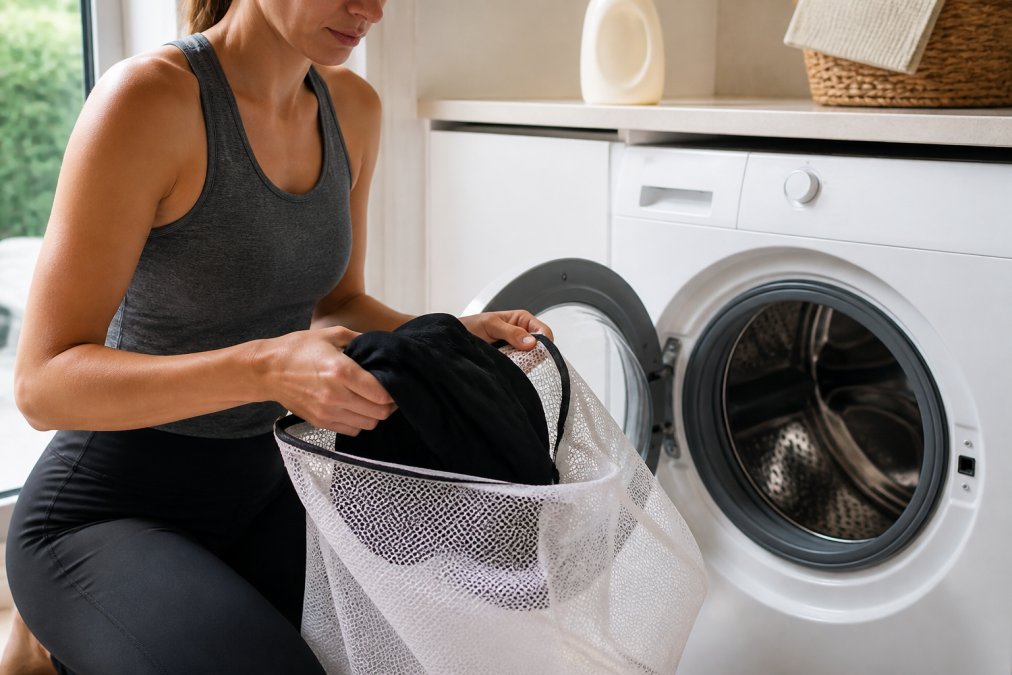
Follow these steps for every wash:
- Turn the leggings inside out
- Place them in a mesh laundry bag
- Use cold water at 30°C or below
- Add a gentle, enzyme-free detergent
- Run a short, gentle cycle
- Remove them straight away, don't let them sit wet
Step 4: Does Tumble Drying Ruin Gym Gear?
Yes. Tumble drying is one of the fastest ways to destroy gym gear elasticity: the heat weakens elastic fibres and the tumbling adds friction on top.
Step 5: Storage, Water Hardness, and Eco-Friendly Care
Three things most guides ignore: water hardness, storage, and what "eco-friendly" actually means for synthetics. All three affect how long your kit keeps its stretch.
Water Hardness and Mineral Buildup
Hard water contains dissolved calcium and magnesium that can deposit into the fibre structure. Over time those deposits stiffen the fabric, reduce its ability to recoil, and leave a dull, chalky feel no detergent fixes.
What helps:
- A water softener on your household supply is the most effective fix in a hard-water area.
- A small amount of distilled white vinegar (roughly half a cup) in the rinse cycle helps dissolve mineral residue and neutralise detergent left behind. It won't soften the water itself, but it reduces what settles into the fabric.
- A chelating or "hard water" detergent binds minerals so they rinse away instead of depositing. Look for one that is still enzyme-free and gentle.
- A final cold rinse before drying flushes loosened minerals out rather than letting them dry into the fibres.
Storage That Protects Elasticity
How you store stretch gear affects how long it holds its shape.
- Store completely dry. Damp gear grows odour and breaks down faster; even slightly damp fabric left folded in a drawer can develop mildew and weaken fibres.
- Do not hang heavy stretch garments by the waistband for long periods. The weight pulls the elastane out of shape over months. Fold compression leggings and heavy tops instead.
- Avoid long-term compression folds. A garment folded tightly on the same crease line for months can create permanent weak points in the elastane. Rotate folds or store loosely rolled.
- Keep gear out of direct sunlight and away from heat sources. UV and heat both accelerate polymer degradation.
- Use a cool, ventilated spot. A wardrobe or drawer with airflow beats a sealed plastic bin that traps residual moisture.
- Never store gear in a gym bag long-term. A damp kit left in a sealed bag for a day or two is a common cause of stubborn odour and premature fibre breakdown.
Eco-Friendly Care That Actually Protects Synthetics
"Eco-friendly" and "fabric-safe" often overlap, but not always. Some natural alternatives are gentle on the environment and harsh on elastane. Here is what genuinely works for both.
- Cold washing does double duty: it protects your gear and cuts the energy a wash cycle uses. Heating water is the largest energy draw in a laundry load.
- Air drying saves power and removes the heat that destroys stretch. A drying rack costs nothing to run.
- Wash full loads to make each cycle count, but do not overload, overloading increases friction and defeats the purpose.
- Choose a plant-based, enzyme-free liquid detergent. Enzymes break down proteins and can attack the protein-based components in some fabric finishes; plant-based formulas without enzymes are gentler on synthetic polymers.
- Skip fabric softener and dryer sheets entirely. They coat fibres, block stretch, and add unnecessary chemicals to wastewater.
- Use a Guppyfriend-style wash bag or a mesh bag to capture microfibres shed during washing, a known environmental issue with synthetic activewear.
- Choose durable, organic fabrics where you can. A garment that lasts years has a far lower environmental cost per wear than one replaced every season.
Common Mistakes That Kill Gym Gear Elasticity
Most ruined gym gear fails for the same handful of reasons. Fix these and your kit lasts years, not months.
- Using fabric softener: it coats fibres and blocks stretch
- Washing in hot water: heat weakens elastic fibres fast
- Tumble drying: the biggest single cause of lost elasticity
- Washing with towels or denim: friction causes pilling and fibre breakdown
- Leaving gear wet in a gym bag: odour and fibre damage set in within hours
- Overloading the machine: more rubbing, more wear
- Using harsh detergents or bleach: they attack the fibre structure
| Mistake | Why It Hurts | The Fix |
|---|---|---|
| Fabric softener | Clogs fibres, blocks stretch | Skip it, use white vinegar |
| Hot water wash | Weakens elastic bonds | Cold wash, 30°C or below |
| Tumble drying | Heat plus friction kills stretch | Air dry on a rack |
| Washing with towels | Causes pilling and wear | Wash with soft fabrics only |
| Storing damp | Odour and fibre breakdown | Dry fully before storing |
Frequently Asked Questions
Does heat destroy the elasticity in gym clothes?
Yes. Heat is one of the main causes of elasticity loss in gym gear. Hot water and tumble drying break down the elastic fibres (spandex and Lycra) that give your gear its stretch. Over time, this leads to sagging, baggy knees, and a stretched-out fit. Wash in cold water (30°C or below) and air dry whenever possible. If you must use a dryer, choose the lowest heat setting and remove items while slightly damp. This single habit change is the fastest way to maintain gym gear elasticity.
How do you restore elasticity to stretched-out leggings?
Once elastic fibres have fully degraded, they cannot be permanently restored. However, you can slow further damage and sometimes revive slight stretch by soaking leggings in cold water with a small amount of white vinegar for 15 to 20 minutes, then air drying flat. Avoid hot water, fabric softener, and tumble drying. If your leggings have lost most of their shape and no longer stay up during workouts, it is time to replace them. Preventing elasticity loss through proper washing and drying is far more effective than trying to reverse it.
Why does fabric softener ruin gym gear elasticity?
Fabric softener coats synthetic fibres like spandex, nylon, and polyester with a waxy film. This residue traps odour, reduces moisture-wicking performance, and stops elastic fibres from flexing naturally. Over repeated washes, the coating causes fibres to stiffen and snap, which means your gear loses stretch and starts to pill. Skip fabric softener entirely for activewear. Use a gentle, residue-free detergent instead, and your compression gear will hold its shape far longer.
How often should you replace high-performance gym wear?
With proper care, quality gym gear should last 12 to 24 months of regular training. Signs it is time to replace include sagging waistbands, stretched-out knees, persistent odour after washing, and visible pilling. Gear used five or more times per week in high-sweat sessions will wear faster than items rotated less often. Buying pieces made from durable fabric blends and washing them correctly will push you toward the upper end of that range. Rotating two or three sets also extends the life of each piece.
Keeping gym gear elasticity intact comes down to a simple challenge: most people wash their kit in ways that quietly wreck it. Shred Cartel solves that with durable, sweat-resistant performance apparel made from a premium organic blend of bamboo, cotton and Lycra, plus caps built from non-absorbent material that resists stains and smells. Every piece is designed to hold its shape through intense training. Get started with Shred Cartel and train in gear that lasts.