


Table of Contents
- Why Activewear Loses Its Shape
- How to Wash Activewear Correctly
- How to Dry Gym Clothes to Preserve Elasticity
- Why Gym Leggings Roll Down and How to Stop It
- How to Keep Leggings From Losing Stretch
- When to Restore Activewear Versus Replace It
- Complete Activewear Care Routine for Long-Lasting Fit
- Conclusion
- Frequently Asked Questions
Last Updated: October 19, 2026
Why Activewear Loses Its Shape
Your gym gear starts out crisp and fitted. After months of heavy training, the waistband rolls down, the fabric feels loose, and those premium leggings look like they've seen better days.
The good news: shape loss isn't inevitable, it's mostly preventable with the right approach to washing, drying, and wearing your gear.
How Fabric Composition Affects Shape Retention
The stretch fibres in your workout clothes, typically Lycra or elastane, give you that snug, supportive fit. These synthetic fibres can only stretch so many times before they lose elasticity permanently.
Cheaper activewear uses lower-quality elastane blends that break down faster under sweat, heat, and friction.
When you buy activewear, check the fibre content. Higher elastane percentages (5-8%) hold their shape better than lower ones (2-3%).
Wear and Tear During Intense Training
Every rep, squat, and sprint stresses your fabric's fibres. Heavy lifting creates constant tension on waistbands and leg openings; high-impact cardio creates friction that breaks down the fabric surface over time.
The more intense your training, the faster your activewear will lose shape unless it's designed for that punishment. Generic cotton blends fail quickly in gyms because they aren't engineered for repeated, extreme stretching.
How to Wash Activewear Correctly
The washing machine is where most activewear damage happens. Hot water, harsh detergents, and aggressive spin cycles break down elastane rapidly, even one careless wash can permanently stretch your favourite leggings.
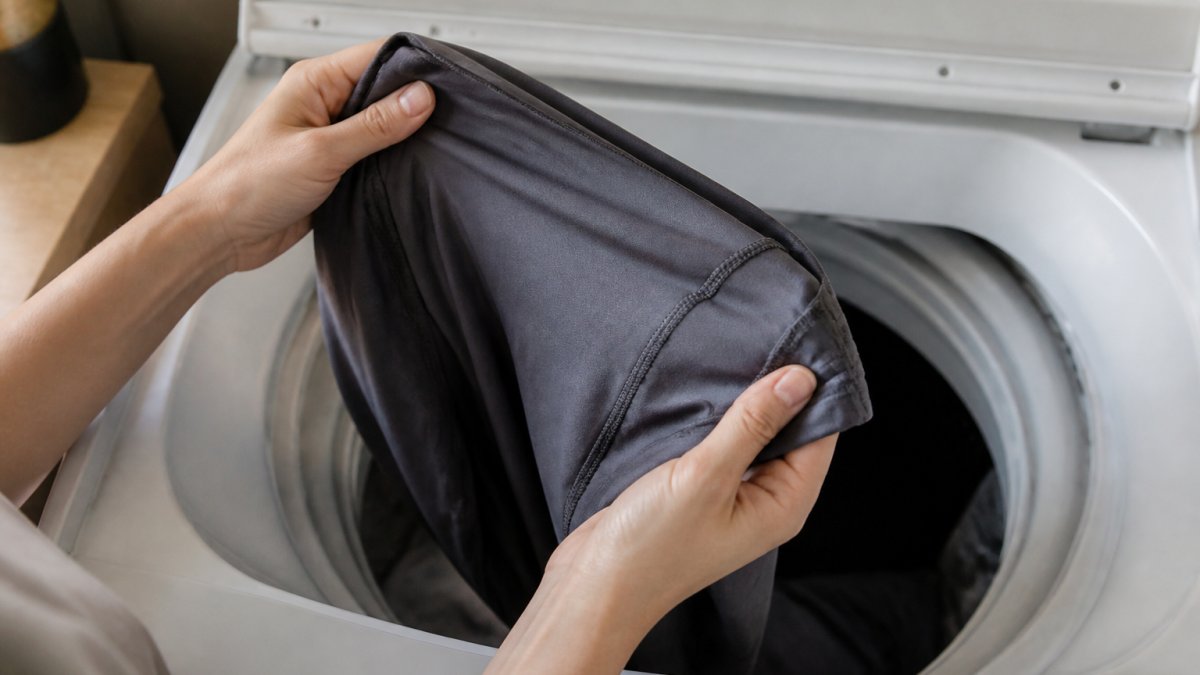
Turn Garments Inside Out Before Washing
Turning activewear inside out protects the outer surface from friction against other clothes and the machine drum. The inside of the fabric is more durable and less prone to pilling or snags.
Always turn leggings, singlets, and shorts inside out before washing. It takes five seconds and extends the life of your gear by months, lay them out inside out as soon as you take them off.
Use Cold Water and Skip Fabric Softener
Hot water accelerates elastane breakdown; cold water cleans just as effectively without the damage. Set your machine to cold every time.
Fabric softener is the enemy of activewear. It coats fibres in a slippery layer that weakens elastane bonds, your gear feels softer for one wash, then permanently loses shape.
Use a gentle detergent designed for delicate fabrics, and avoid bleach and oxygen-based cleaners.
Avoid Over-Washing Your Workout Clothes
Most people get this wrong: you don't need to wash activewear after every session. Sweat itself doesn't permanently damage fabric, bacteria growth does.
Wash activewear every 2-3 wears if training hard, or 4-5 wears for lighter sessions.
Over-washing is the fastest way to ruin premium activewear. Every wash cycle stresses the elastane. Fewer washes means longer-lasting stretch and shape.
How to Dry Gym Clothes to Preserve Elasticity
Tumble dryers are brutal on activewear. The heat shrinks and weakens elastane fibres, while the tumbling action creates friction that breaks down the fabric surface and causes pilling.
Air-Dry Instead of Tumble-Drying
Air-drying is non-negotiable for preserving activewear shape.
Air-drying takes longer but truly protects your investment. Most activewear dries within 4-6 hours on a clothesline, plan ahead so you're not rushing to tumble dry in a pinch.
If you absolutely must use a dryer, use the lowest heat setting and remove items while still slightly damp, but air-drying is the standard to aim for consistently.
Why Gym Leggings Roll Down and How to Stop It
Rolling waistbands are the most common complaint about worn-out leggings. The elastic in the waistband loses tension over time, driven by repeated stretching, improper washing, and heat exposure.
The real culprit is usually over-washing combined with tumble-drying. Each wash stretches the waistband slightly, and dryer heat weakens the elastane permanently, after dozens of cycles, it can no longer hold its shape.
To prevent rolling: wash less often, air-dry consistently, and avoid hot water.
How to Keep Leggings From Losing Stretch
Leggings are the most demanding piece of activewear: stretched in every direction, pressed against abrasive surfaces, and washed more often than almost anything else in your kit. Keeping their stretch is less about one magic step and more about diagnosing what's failing, then treating each garment type according to its job.
Diagnose the cause before you change your routine
Before you blame the washing machine, run through these checks:
- Is the fit right? Leggings that are too small are under constant tension, which fatigues elastane faster. If the waistband digs in or the fabric looks strained across the hips when you stand, the size is the problem, not the care.
- Is it normal wear? Some softening and slight relaxation after months of training is expected. If the leggings still stay up during a workout, the stretch is doing its job.
- Is it heat damage? If the fabric feels thinner, slightly stiff or has lost its snap all over rather than in one spot, heat from hot washes or tumble-drying is the likely cause.
- Is it elastic fatigue in one area? A waistband that rolls or a leg opening that gapes points to localised elastane breakdown, often from repeated stretching at that point.
- Is it surface damage? Pilling, snags and thinning are friction damage. They can make the fabric feel looser even when the elastane is intact.
Quick test: stretch a small section gently and release it. Good elastane snaps back quickly; fatigued elastane returns slowly or stays stretched. Compare a worn area with a less-worn one, like the inside of the waistband.
Care differences by garment type
A single routine is convenient, but each garment type has different priorities.
Shred Cartel Base Shorts – Black →
Leggings need the most protection from abrasion.
Sports bras are usually your most elastane-dense item and often washed every session.
Compression garments rely on consistent, even tension. Avoid wringing or twisting them wet, which distorts the knit, and dry flat where possible so gravity doesn't stretch them out of shape.
Delicate performance fabrics like lightweight singlets and mesh panels snag easily.
Protect fabric from Velcro and rough surfaces
Velcro is destructive to activewear, a single brush against a strap can create snags that spread into holes. Rough gym equipment, concrete floors and textured benches also damage the surface of your leggings.
Wear leggings on smooth surfaces where possible, avoid sitting directly on rough equipment, and be mindful of abrasive ground during outdoor training. Prevention is far easier than repair.
Diagnose and repair pilling, snags and bobbling
Pilling (small balls of fibre on the surface) signals fabric breakdown, usually from friction in the wash or during wear.
Snags are small pulls that can spread into holes if ignored.
Bobbling happens when short fibres break loose and clump together, cosmetic damage that doesn't affect function. Remove bobbles with a fabric shaver on the lowest setting, but careful washing is better prevention.
Prevent shape loss during wear and storage
Laundry is only half the story. How you wear and store leggings affects their stretch just as much.
- Rotate your gear. Wearing the same pair every session doesn't give elastane time to recover. Rotating two or three pairs spreads the load and extends the life of each.
- Avoid over-stretching. Pulling leggings on by the waistband or yanking them up strains seams and elastic. Roll them on gently.
- Let them relax between wears. If leggings aren't soiled, hang them to air rather than leaving them bunched in a gym bag.
- Store flat or folded, not stretched. Don't hang leggings by the waistband long-term or cram them into a drawer so tightly the elastic is compressed.
- Keep them away from heat. Heaters, hot cars and direct sunlight degrade elastane over time.
When to Restore Activewear Versus Replace It
Not all shape loss is permanent. Understanding the difference between cosmetic damage and structural failure helps you make smart replacement decisions.
Cosmetic damage (pilling, minor snags, light fading) doesn't affect performance. Your leggings still provide compression and comfort.
Structural failure (permanent waistband stretching, holes, severe elastane breakdown) means your activewear can't do its job anymore. The compression is gone. The fit is compromised.
Complete Activewear Care Routine for Long-Lasting Fit
A structured care routine is the difference between activewear that lasts longer and gear that loses its shape quickly. Follow this system consistently.
Step-by-Step Washing and Drying Process
- Wear your activewear 2-3 times before washing (or up to 5 times for lighter sessions)
- Turn all garments inside out before placing in the machine
- Use cold water on a gentle or delicate cycle
- Add mild detergent only, no fabric softener, no bleach
- Wash with similar colours to prevent dye transfer
- Remove immediately after the cycle finishes, don't let wet gear sit
- Hang on a clothesline or drying rack in indirect light
- Air-dry completely before wearing or storing (4-6 hours typically)
- Never tumble dry unless absolutely necessary (lowest heat only)
This routine takes minimal extra effort but extends the life of your activewear dramatically.
Storage and Between-Wear Maintenance
Fold leggings and singlets neatly in a drawer or on a shelf, avoiding tight spaces where elastic gets compressed.
Store activewear away from direct heat and sunlight in a cool, dry drawer, and avoid plastic bags, which trap moisture and cause mildew.
Inspect your gear regularly for early damage, catch snags early and address pilling before it spreads, so small problems don't become reasons to replace your favourite pieces.
| Care Step | Frequency | Impact on Shape Retention |
|---|---|---|
| Turn inside out | Every wash | Prevents surface damage and pilling |
| Use cold water | Every wash | Protects elastane from heat breakdown |
| Skip fabric softener | Every wash | Maintains elastane strength |
| Wash every 2-3 wears | Per wearing cycle | Reduces cumulative stress on fibres |
| Air-dry only | Every wash | Prevents heat-induced permanent stretching |
| Inspect for damage | Weekly | Catches problems early before they worsen |
Conclusion
Activewear loses its shape because elastane fibres break down under stress, heat, and improper care, but shape loss isn't inevitable.
Cold water, gentle washing, air-drying, and less frequent washing are the core practices that preserve elasticity. Pair these with quality activewear made from premium fabric blends, like the bamboo and Lycra blend used in Shred Cartel Base Shorts and the Iconic Singlet, and your gear will maintain its fit through months of intense training.


Start implementing this complete care routine today. According to textile care standards from major activewear manufacturers, proper garment care extends the functional life of performance fabric by 40-60% compared to standard washing practices.
The difference between gear that falls apart and gear that performs season after season comes down to these habits. Make them non-negotiable, and your investment in quality activewear will pay dividends.
Frequently Asked Questions
Why does activewear lose its shape after washing?
Activewear loses shape due to several factors: heat from hot water and tumble-drying damages Lycra and elastane fibres, fabric softener coats fibres and reduces elasticity, and repeated friction during washing weakens the stretch. Choosing cold water, air-drying, and skipping fabric softener preserves the fibres that give activewear its compression and fit. Premium blends like Shred Cartel's bamboo-cotton-Lycra mix maintain elasticity longer when cared for properly.
How often should you wash activewear to keep it stretchy?
Avoid over-washing your workout clothes. Wash activewear after every 2-3 wears if you're doing light activity, or after every wear if you've sweated heavily. Excessive washing accelerates fibre breakdown and stretching. Between wears, hang garments in fresh air to reduce odour and bacteria without damaging the fabric. This balance keeps your leggings and compression pieces performing longer.
Can you fix activewear that has already lost its stretch?
Minor stretching can sometimes be improved by hand-washing in cold water and air-drying flat, which allows fibres to relax. However, if your leggings or shorts have permanently lost elasticity or show significant pilling and damage, replacement is the better option. High-quality activewear, like Shred Cartel's base shorts and singlets, maintains its shape when proper care is followed from day one.
What's the best way to dry gym clothes without damaging them?
Always air-dry activewear. Hang garments on a clothesline or lay them flat on a clean, dry surface away from direct sunlight and heat sources. Tumble-drying, even on low heat, damages elastane and Lycra fibres, causing permanent stretching and loss of compression. Air-drying takes longer but preserves the shape and elasticity that keeps your workout wardrobe functional and comfortable through intense training sessions.