


Table of Contents
- Keep That Pump Alternative Brands: What Actually Changes Your Training
- How to Choose Gym Apparel for Durability: A Six-Point Test
- Durable Gym Wear Australia: What Holds Up Under Heavy Lifting
- Organic Cotton Gym Wear Benefits: Breathability, Odour and Skin Comfort
- Brand-to-Brand Cross-Reference: Matching Your Current Gear to a Replacement
- Performance Benchmarking: How Alternative Brands Compare on Wear and Repair
- Frequently Asked Questions
Last Updated: October 4, 2026
Keep That Pump Alternative Brands: What Actually Changes Your Training
When your go-to gym gear stops holding up, the search for Keep That Pump alternative brands usually starts for one reason: something wore out faster than it should have.
Durable gym wear is clothing engineered so its fabric, seams and fit hold up under repeated high-exertion use and washing, rather than just feeling good in the change room.
Below, we break down how to test any brand before you commit, what the marketing language hides, and how to match a replacement to the gear you are actually retiring.
How to Choose Gym Apparel for Durability: A Six-Point Test
Choosing gym apparel for durability comes down to six checks you can run in a change room or on a product page in under five minutes. None of them require lab equipment.
- Fabric weight and hand-feel. Heavier knits resist thinning. If the fabric feels flimsy between thumb and forefinger, it will pill.
- Stretch recovery. Stretch the waistband or cuff, hold for five seconds, release. It should snap back flat, not stay stretched.
- Seam type. Flatlock or reinforced seams outlast basic overlock stitching at stress points like shoulders and crotch.
- Gusset presence. A crotch gusset reduces seam strain during squats and lunges.
- Care label honesty. A garment demanding cold hand-wash only will not survive a real training week.
- Odour resistance. Squeeze the fabric after wear. If it holds smell, the fibre blend is wrong for you.
Fabric Weight and Stretch Recovery
Fabric weight is measured in grams per square metre, and it tells you how much punishment a garment will take. Lightweight knits feel cool but thin out fast under repeated friction from barbells and benches. Stretch recovery depends on the elastane content and how it is spun into the yarn. A blend with a modest elastane percentage holds shape better than a cotton-heavy knit with no recovery fibre at all.
Seams, Gussets and Wash Performance
Seams fail before fabric does in most cases. Flatlock seams lie flat against the skin and distribute load across multiple thread rows. Gussets remove the single weak point where four seams meet. Wash performance is the final filter: a garment that pills, fades or twists after ten cycles will not make it through a training block.
Durable Gym Wear Australia: What Holds Up Under Heavy Lifting
Durable gym wear in the Australian market tends to separate into two camps: performance streetwear built for looks, and training gear built for load. The second group is smaller than the marketing suggests.
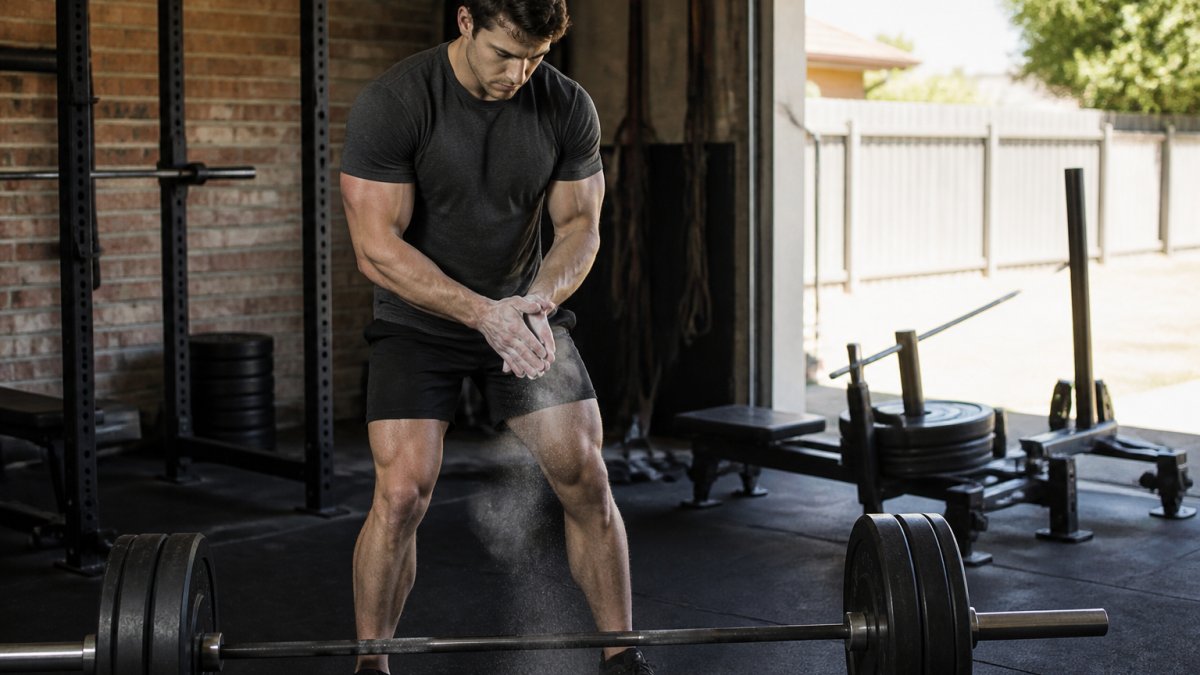
What separates the two is repairability and material honesty.
Organic Cotton Gym Wear Benefits: Breathability, Odour and Skin Comfort
Organic cotton gym wear benefits come down to three things: breathability, odour control and skin comfort. Organic cotton is grown without synthetic pesticides, and the certification behind it is independently audited rather than self-declared.
Breathability matters most during high-sweat sessions. Natural fibres move moisture and allow airflow in ways that fully synthetic knits often do not.
The catch is recovery. Pure organic cotton stretches and stays stretched. That is why blends matter.
Brand-to-Brand Cross-Reference: Matching Your Current Gear to a Replacement
Most guides silo you into one part number or one brand's sizing chart. A cross-reference works the other way: you start with what you already own, identify its failure point, and match that failure to a construction feature. That is the fastest route to a replacement that actually fixes the problem rather than repeating it.
Use the table below to map the gear you are retiring to the attributes you should demand next.
| What You Currently Own | What It Does Well | Where It Fails | What to Look For in a Replacement |
|---|---|---|---|
| Lightweight training tee | Cool in summer | Pills and thins fast | Heavier knit with recovery fibre |
| Cotton-heavy hoodie | Soft, breathable | Loses shape at cuffs | Bamboo-cotton-elastane blend |
| Basic snapback cap | Cheap, replaceable | Holds sweat and odour | Sweat-resistant non-absorbent material |
| Compression shorts | Supportive | Seams split at gusset | Flatlock seams plus gusset |
| Everyday streetwear | Looks sharp | Not built for load | Performance streetwear with reinforced seams |
Matching by Brand Archetype, Not Logo
Brand names change; construction archetypes do not. Most activewear on the market falls into one of four archetypes, and each has a predictable failure mode. Match your old garment to the archetype, then choose the replacement that corrects it.
- Performance streetwear archetypes. Cut for appearance and casual wear. Expect strong colourways and silhouette, weaker seam reinforcement at shoulders and crotch. Replace with a piece that keeps the look but adds flatlock or reinforced stitching at stress points.
- Budget basics archetypes. Sold in multipacks, often cotton-dominant. They feel soft initially but have little or no recovery fibre, so necklines and hems stretch permanently. Replace with a blend that includes elastane or Lycra for shape retention.
- Technical training archetypes. Built around moisture movement and stretch. The risk here is over-reliance on synthetic knits that trap odour. Replace with a natural-fibre blend if odour retention is your main complaint.
- Heritage workwear archetypes. Heavy, durable, but slow to dry and often cut for static work rather than lifting. Replace with a lighter knit that still carries reinforced seams if you train in the same gear you work in.
Reading a Composition Label Like a Cross-Reference
The care label is the most honest cross-reference document a brand publishes. A composition such as 67% bamboo, 28% cotton and 5% Lycra tells you three things at once: the dominant fibre governs breathability and hand-feel, the secondary fibre governs durability and cost, and the elastane percentage governs stretch recovery. If a brand lists only "premium blend" without percentages, treat that as a missing data point and look elsewhere.
Fitment and Sizing Across Brands
Sizing is not standardised across activewear brands, so a medium in one range can sit like a small in another. Two measurements transfer reliably: chest circumference measured under the arms, and inseam measured from crotch seam to hem.
This is the cross-reference most guides skip. Instead of chasing a brand name, match the failure point of your old gear to the construction feature that fixes it.
Performance Benchmarking: How Alternative Brands Compare on Wear and Repair
Benchmarking alternative brands means scoring them on how they age, not how they look new. Three measures do most of the work: wash cycles before visible breakdown, seam integrity under load, and whether the brand offers any repair or replacement pathway. None of these require a laboratory. They require you to look at the right part of the garment and ask the right question.
The Three Benchmark Metrics
Wash cycles before visible breakdown. A common pattern is that lightweight knits show pilling at friction points within roughly twenty to thirty domestic washes, while heavier knits with recovery fibre hold their surface longer.
Seam integrity under load. Seams fail before fabric does in most cases. Flatlock seams distribute load across multiple thread rows and lie flat against the skin.
Repair and replacement pathways. A brand that sells replacement parts, offers repair, or publishes care instructions detailed enough to extend garment life is signalling confidence in its construction.
Comparative Trade-Offs Between Alternative Types
Benchmarking is not about finding a single winner. It is about knowing what you are trading away.
- Natural-fibre blends versus fully synthetic knits. Natural blends tend to breathe better and resist odour retention, but they dry more slowly and can cost more per garment. Synthetic knits dry fast and wick aggressively, but trap odour over time and rely on antimicrobial treatments that fade with washing.
- Heavier knits versus lighter knits. Heavier knits resist thinning and pilling, but feel warmer and take longer to dry. Lighter knits suit hot sessions but break down faster at friction points.
- Higher elastane content versus lower. More elastane improves stretch recovery and shape retention, but very high percentages can reduce breathability and shorten garment life if the fibre degrades. A modest percentage is usually the better long-term trade.
- Repairable versus replaceable. A repairable garment costs more upfront but lowers cost-per-wear over years. A cheap replaceable garment costs less per purchase but more per session once you factor in replacement frequency.
Cost-Per-Wear: The Benchmark Buyers Forget
Cost-per-wear is the simplest benchmark you can run yourself. Divide the purchase price by the number of training sessions you realistically expect the garment to survive. A garment worn three times a week for two years delivers roughly three hundred sessions.
This is also where sustainability and repairability intersect with plain economics. Gear that can be repaired, or that holds up for years, reduces both cost-per-wear and landfill. That is a practical argument, not a moral one.
Most brands publish none of this benchmarking data, which is itself a signal. A brand confident in its construction will state its fabric composition and care expectations plainly. A brand that hides behind words like "premium" and "high-performance" without a composition breakdown is asking you to take its word for it.
For broader guidance on textile care and fibre performance, the Australian Competition and Consumer Commission product care guidance and Textile fibre performance research from CSIRO are useful starting points. Standards Australia also publishes textile testing and labelling standards that underpin care labels.
Frequently Asked Questions
What are the best Australian gym wear brands for heavy lifting?
Look for brands that publish fabric composition and weight rather than just marketing claims. For heavy lifting, the deciding factors are four-way stretch that recovers its shape, flatlock or reinforced seams that do not rub under a bar, and a fabric blend that wicks sweat instead of holding it. Bamboo-cotton-Lycra blends and heavier polyester-elastane mixes both work; the difference shows up after 30 or more washes, when cheaper knits sag at the knees and shoulders.
Are there durable alternatives to Keep That Pump apparel?
Yes. Several Australian-designed labels now build training gear around heavier knits, gusseted construction and sweat-resistant finishes. When comparing pump alternative brands, check three things: the stated fabric blend, whether the seams are flatlocked or overlocked, and whether the brand lists care instructions that match how you actually wash. A brand that publishes its fabric percentages and offers tracked shipping is easier to assess than one that only shows lifestyle photos.
Is organic cotton better for intense workout gear?
Organic cotton on its own absorbs sweat and dries slowly, so pure cotton is a poor choice for heavy sessions. Blended with bamboo and a small amount of Lycra, though, it becomes breathable, soft against the skin and far less prone to odour than synthetic-only fabrics. The organic cotton gym wear benefits show up most in comfort and smell control; for maximum drying speed in humid conditions, a bamboo-cotton-Lycra blend still outperforms plain cotton.
How do I know a certified organic fabric claim is legitimate?
Ask the brand which certification body issued the certificate and what scope it covers, then check that the certificate number is traceable. A genuine claim names the standard and the certifying organisation rather than just printing the word organic on a label. If a brand cannot tell you who certified the fabric, treat the claim as unverified and judge the garment on its stated composition and construction instead.
Gear that fails mid-training block costs you more than the purchase price. Shred Cartel builds Australian-designed performance activewear around a premium organic fabric blend, sweat-resistant hat materials and construction made to hold up under repeated heavy use, backed by a 4.99 star rating across 144 verified reviews. Browse our collections and find gear built for the grind.