


Last Updated: November 8, 2026
Quick Summary
To prevent fabric pilling, choose tightly knitted, smooth-faced gym shirts, reduce rubbing during training, and wash them inside out in cold water on a gentle cycle. Dry them flat or on a rack rather than in a hot tumble dryer, since heat and tumbling add friction that loosens fibres.
- Pick dense, smooth-faced knits with long-staple or filament yarns, which have fewer loose fibre ends.
- Adjust bar and rack position and rotate shirts to reduce abrasion on the chest, upper back and sides.
- Turn gym shirts inside out, zip up zips and keep rough items like jeans out of the load.
- Wash on a cold, gentle cycle with a smaller load and skip fabric softener for technical fabrics.
- Air-dry shirts in a shaded, ventilated spot, and lay stretchy knits flat to keep their shape.
Table of Contents
- Why Gym Shirts Pill: Friction, Fibres and Fabric Construction
- Step 1: Choose Fabrics That Resist Pilling
- Step 2: Reduce Friction During Workouts
- Step 3: Turn Gym Shirts Inside Out and Sort Your Laundry
- Step 4: Wash Activewear on a Cold, Gentle Cycle
- Step 5: Use the Right Detergent and Check Fabric Softener Use
- Step 6: Air-Dry Your Gym Shirts Properly
- Step 7: Remove Existing Pills Without Damaging Your Shirt
- Keep Your Gym Shirts Looking Sharp
- Frequently Asked Questions
Why Gym Shirts Pill: Friction, Fibres and Fabric Construction
Learning how to prevent fabric pilling can help keep a gym shirt looking sharp, since those small fibre balls are what make it start to look tired.
Pilling happens when friction loosens short fibres on the surface of a knit. Those fibres tangle into small balls that cling to the fabric.
Quick answer: To prevent fabric pilling on gym shirts, choose tightly knitted, smooth-faced fabrics, reduce rubbing during training, and wash inside out in cold water on a gentle cycle.
What fabric pilling is and how it forms
Pilling is the formation of small balls of tangled fibre on the surface of a fabric. It starts when loose fibre ends work their way out of the yarn. Friction then rolls those ends into knots that stay attached to the cloth.
Fabric that is knitted loosely, or that has a mix of short and long fibres, pills faster. A tighter knit gives those fibres less room to escape.
Pilling or other fabric damage? How to tell the difference
Not every rough patch is pilling. Use this quick check:
- Pilling: small, raised fibre balls that sit on the surface and rub off or cling
- Abrasion or thinning: the fabric looks worn and see-through in the same spot, with no balls
- Snags: a single pulled thread that runs in a line
If you see balls, you are dealing with pilling and the steps below will help. If the cloth is thin and worn through, the shirt has reached the end of its life.
Step 1: Choose Fabrics That Resist Pilling
Start with the shirt you buy. Fabric composition and knit construction do more to determine pilling than any care step, and most guides skip the mechanics entirely. Here is what actually matters when you are standing in front of a rail.
Fibre composition: why some yarns shed and others do not
Pilling begins when short fibre ends escape the yarn. The shorter and more numerous those loose ends, the more material there is to tangle into balls. That is why fibre length and type matter more than brand claims.
- Long-staple cotton and filament synthetics have fewer loose ends because the fibres are longer or continuous. Filament polyester, for example, is extruded as a continuous strand rather than spun from short staples, so it has far fewer free ends to work loose.
- Short-staple cotton and spun synthetics shed more fibre ends and pill faster under abrasion.
- Blends behave according to their weakest component. A polyester-cotton blend can pill because the short cotton fibres work loose while the stronger polyester holds the pills on the surface instead of letting them break away.
A practical rule: a smooth-faced filament synthetic or a tight long-staple blend will usually outlast a soft, fuzzy, short-staple knit in the same price bracket.
Knit structure and fabric weight
How the yarn is knitted determines how much room fibres have to escape.
- Tighter, denser knits trap fibres in the structure and present a smoother face to friction.
- Looser, loftier knits, including many brushed or peached finishes, feel soft but give fibres room to migrate and pill.
- Fabric weight (GSM) is a useful proxy. Lighter single-jersey knits in the 120-150 GSM range are common in cheap gym shirts and tend to pill faster than denser 160-200 GSM knits because there is less material holding the surface together.
When you pinch the fabric, it should feel dense and springy rather than thin and slack. Hold it up to the light: if you can see straight through it easily, it is probably too light and loose to resist abrasion well.
What to look for on the label and in the hand
- Tight, even knit that feels dense when you pinch it
- Long-staple or filament yarns that have fewer loose ends
- Smooth face with no obvious loose loops or fuzz
A common mistake is choosing the thinnest, lightest shirt for comfort. Thin knits often pill faster because there is less fabric holding the fibres in place.
Pair any shirt you buy with the care steps below to get the longest life out of it. For a full routine on keeping gym gear elastic and intact through washing, see our dedicated care guide for gym gear.
Step 2: Reduce Friction During Workouts
Much pilling is caused by rubbing during training, not by washing. Generic advice says to reduce friction, but gym shirts face specific abrasion sources that most guides never name. Here is where the damage actually comes from and how to limit it.
Where gym shirts actually abrade
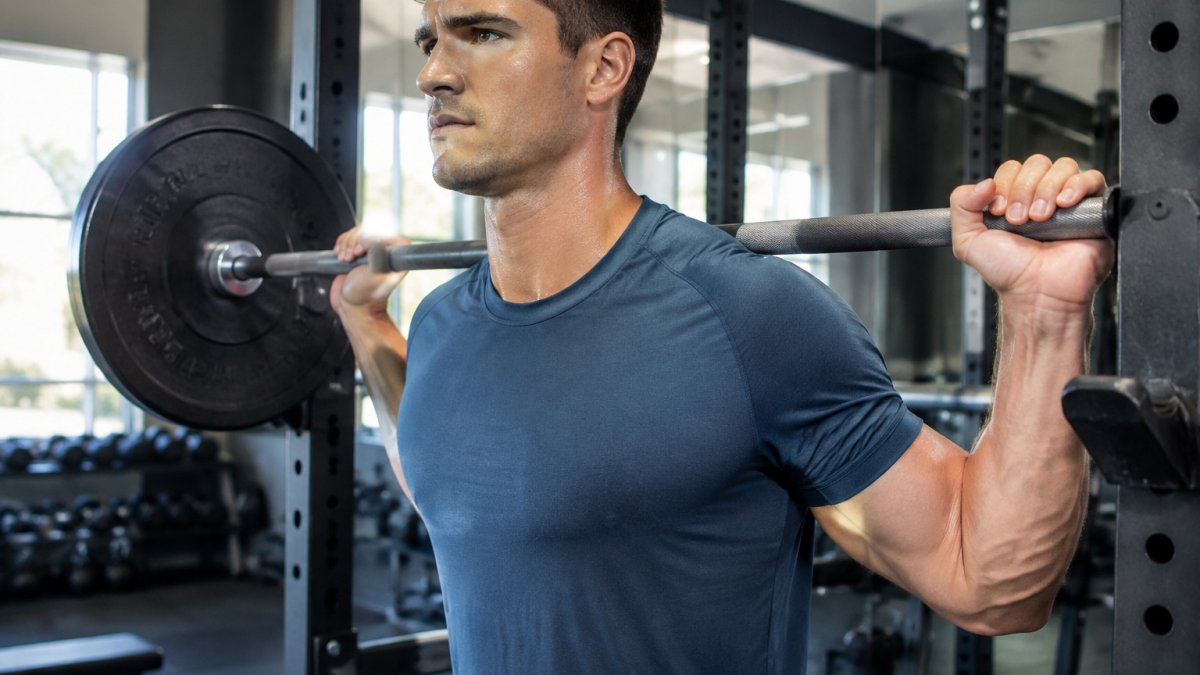
- Bar and equipment contact: a barbell resting across the chest or upper back, a bench pad under the shoulder blades, and machine pads against the torso all rub the same spots rep after rep. The chest, upper back and sides are the usual pill zones for this reason.
- Rucksack and bag straps: a backpack or gym bag strap running over the shoulder and across the chest creates continuous rubbing during walking and commuting, not just during the session.
- Repeated arm movement: high-rep pressing, rowing and cable work slide the shirt against the torso and against itself under the arms. The more reps and the higher the intensity, the more cumulative abrasion.
Practical changes that reduce abrasion
- Adjust your bar and rack position so the shirt is not dragged across the bar on every rep. A small change in setup can move the contact point off a high-wear zone.
- Wear a sleeveless layer or tank under a heavy shirt if you train with a rucksack or weighted vest. The inner layer takes the rubbing instead of the outer shirt.
- Use grip tools like straps or chalk so you are not wiping sweaty hands on your chest between sets.
Think of this as protecting the fabric the same way you protect your joints. Less rubbing means less pilling, and a shirt that holds its shape for longer. No routine eliminates friction entirely, the goal is to spread it and reduce the worst of it.
Step 3: Turn Gym Shirts Inside Out and Sort Your Laundry
Washing is where most people undo the good work. The fix is simple: turn every gym shirt inside out and sort your laundry before it goes in the machine.
Here is a routine that works:
- Turn each shirt inside out so the rough outer face is protected
- Zip up zips and fasten Velcro to stop them snagging other items
- Wash gym shirts with similar fabrics, such as other activewear
Sorting by fabric type is the step most people skip. A load of activewear rubbing against denim is a fast route to pilling. Keep the synthetic and blended tops together and away from heavier fabrics.
Step 4: Wash Activewear on a Cold, Gentle Cycle
Heat and agitation are the two biggest washing enemies of performance fabric. Use cold water and the gentlest cycle your machine offers.
Follow these steps:
- Check the care label first, then follow its instructions
- Select a cold water, gentle or delicate cycle
- Reduce spin speed if your machine allows it
- Keep the load small so the shirts can move freely without knotting together
- Remove shirts promptly once the cycle ends
Cold water helps the fabric keep its shape and finish. If you are wondering how to wash organic cotton activewear specifically, this detailed washing guide walks through it step by step.
Watch out: Overloading the machine rubs shirts together and causes exactly the friction you are trying to avoid. Wash in smaller loads.
Step 5: Use the Right Detergent and Check Fabric Softener Use
The detergent you choose and whether you use softener both affect how your shirts age.
- Choose a mild, liquid detergent designed for activewear or delicates
- Use the amount on the pack rather than extra, which can leave residue
- Skip fabric softener for technical fabrics, since it can coat the fibres and make them more prone to balling up
Many readers ask whether fabric softener causes pilling. In general, softener can leave a film that changes how fibres sit against each other, so it is safest to leave it out of your gym-shirt wash.
If you are unsure how to wash activewear overall, the routine in Steps 3 to 6 covers it from sorting to drying.
Step 6: Air-Dry Your Gym Shirts Properly
How you dry your shirts matters as much as how you wash them. Heat is the main damage source.
- Hang shirts on a drying rack or line in a shaded, well-ventilated spot
- Lay them flat if the knit is stretchy and may lose its shape when hung
- Avoid tumble dryers, which combine heat with tumbling friction
Air drying takes longer, but it protects the fabric. A shirt dried flat in the shade will keep its finish far longer than one blasted in a hot dryer.
Heat and tumbling are the main drying risks, so this quick reference shows what to avoid and what to do instead.
| Drying method | Effect on pilling | Recommended action |
|---|---|---|
| Tumble dryer | Heat plus tumbling adds friction | Avoid |
| Hot direct sun | Weakens fibres, fades colour | Keep out of direct sun |
| Drying rack or line | Gentle, keeps fabric intact | Use in a shaded, ventilated spot |
| Stretchy knit | May lose its shape when hung | Lay flat to dry |
Step 7: Remove Existing Pills Without Damaging Your Shirt
If pills have already formed, you can remove them and extend the life of the shirt. Be gentle, or you will create thin spots.
Try these methods:
- Use a fabric shaver set to a low setting, moving slowly in one direction
- Use a fabric comb or pill stone with light pressure on the flat surface
- Trim pills by hand with a sharp razor blade held flat, only for small, stubborn spots
Work on a flat surface and avoid pressing hard. Shaving too aggressively can thin the knit and create holes.
Pill removal is a maintenance step, not a fix for poor care. Combine it with Steps 1 to 6 so your shirts stay looking good for longer.
Keep Your Gym Shirts Looking Sharp
Preventing pilling comes down to four habits: choose a dense, smooth fabric, reduce friction while you train, wash gently in cold water with similar fabrics, and air-dry flat or on a rack. Follow those and your gym shirts will hold their finish through heavy training.
Browse our Collections at Shred Cartel for activewear designed for training. For current pricing, check the website or request a quote.
Frequently Asked Questions
Why do gym shirts pill?
Gym shirts pill because friction from rubbing against your body, a bag strap, or other garments pulls loose fibres to the surface, where they tangle into small balls. Synthetic fibres such as polyester and the Lycra in stretch blends are especially prone to this because they are strong enough to hold the pills rather than break them off. Frequent sweaty workouts, heavy lifting with bar contact, and tumble drying all speed up the process. Reducing abrasion and washing gently are the two most effective ways to slow it down.
Does washing gym shirts inside out prevent pilling?
Yes. Turning a gym shirt inside out before washing shields the outer face, which takes most of the abrasion in the machine. Fabric rubbing against the drum, the lid, and other clothes is what loosens fibres, so keeping the printed or smooth side protected helps. Zip up zippers and fasten Velcro before washing, and wash activewear with similar fabrics so lighter, rougher items don't scrape the shirts. This step costs nothing and is one of the simplest habits to build.
Does fabric softener cause gym shirts to pill?
Fabric softener can contribute to pilling and also coats technical fabrics, reducing their ability to wick sweat. Many activewear makers advise against it for this reason. Use a small amount of detergent instead, and if you want softness, check your shirt's care label first. Skipping fabric softener keeps the fibres free to move, which matters more for training gear than a softer feel.
How do I remove pills from a gym shirt?
Lay the shirt flat on a clean surface and gently remove pills with a fabric shaver or a fabric comb, working in the direction of the knit so you do not cut the surface. A pill remover with a rotary blade is faster but needs care on thin synthetic knits. Shaving removes the pills but not the underlying fibre loss, so the area may pill again. If the shirt is thin, stretched or has worn patches, replacing it may be the better option.
