


Table of Contents
- Why Bamboo Running Shorts Are Gaining Ground in 2026
- Moisture-Wicking Bamboo Fabric Benefits for High-Intensity Training
- Bamboo vs Polyester for Running: Which Performs Better?
- Built-In Compression Liners and Chafing Prevention
- How to Wash Bamboo Activewear to Maintain Shape and Performance
- Choosing the Right Inseam and Fit for Your Running Gait
- Environmental Impact and Lifecycle of Bamboo Running Shorts
- Conclusion: Making Bamboo Running Shorts Work for Your Training
- Frequently Asked Questions
Last Updated: September 16, 2026
Why Bamboo Running Shorts Are Gaining Ground in 2026
Bamboo running shorts have moved from niche eco-friendly option to serious performance gear. This guide covers the fabric science, care, and fit decisions that separate shorts you'll wear for years from ones that pill within a month.
What Sets Bamboo Apart from Traditional Gym Shorts
Traditional gym shorts lean on polyester and nylon because those fibres are cheap and dry fast. Bamboo viscose is a natural fibre that manages moisture, regulates temperature, and feels softer against skin, meaning less chafing on long runs and no odour retention the way polyester has.
The trade-off is real: bamboo dries slower than pure synthetics, and low-quality blends lose shape faster. Blending bamboo with a small percentage of Lycra solves most of that.
Moisture-Wicking Bamboo Fabric Benefits for High-Intensity Training
Moisture-wicking bamboo fabric moves sweat away from your skin and spreads it across the surface so it evaporates faster, preventing the friction, overheating, and cling of high-intensity training.
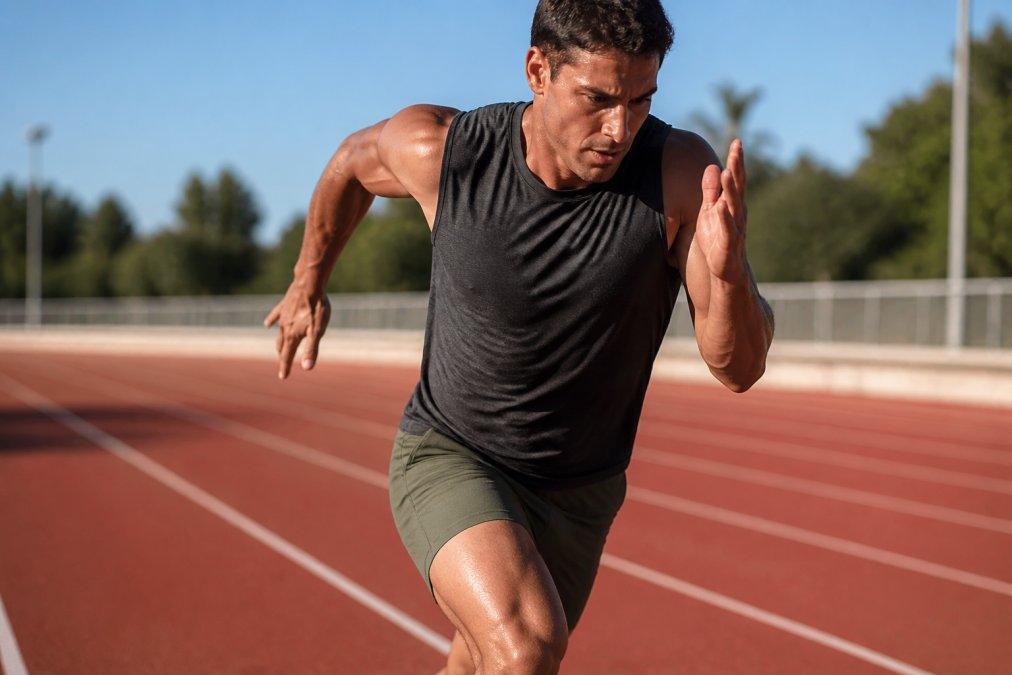
Bamboo viscose fibres are porous, absorbing and releasing moisture efficiently. Unlike cotton, which holds water and gets heavy, bamboo moves sweat along and lets airflow do the rest, keeping shorts comfortable through the second half of a session.
Thermal Regulation and Breathability Compared
Bamboo outperforms most synthetics in warm conditions because its fibre structure lets air move through the fabric, regulating body temperature. Polyester feels clammy once saturated because it relies entirely on surface evaporation; bamboo absorbs moisture into the fibre itself, reducing wet-cling.
That said, in peak summer humidity a lightweight synthetic may dry marginally faster. Where bamboo wins is the combination of thermal regulation, softness, and odour resistance across a full training week.
Bamboo vs Polyester for Running: Which Performs Better?
For most runners, bamboo wins on comfort, odour control, and sustainability; polyester wins on drying speed and durability. The right answer depends on two variables most comparisons ignore: fabric weight and effort length.
Comparative Weight Analysis: GSM and Drape
Fabric weight is measured in GSM (grams per square metre), the most useful number for predicting how a running short behaves. Performance polyester shorts sit at 110-150 GSM, which is why they feel papery and dry instantly. Bamboo viscose blends land higher, at 160-200 GSM, because the fibre is denser and drapes rather than floats.
A 130 GSM polyester short feels cooler in the first kilometre and dries faster after a downpour, but clings aggressively once saturated and offers almost no structure.
How Bamboo Behaves Across Sprint vs Endurance Efforts
Bamboo and polyester diverge most sharply by effort duration, not intensity.
Durability and Environmental Impact
Durability depends more on the blend than the base fibre. Pure bamboo viscose can pill and stretch, especially around the inner thigh and waistband, but a blend with 5% Lycra holds its shape through repeated washing and high-intensity training. Polyester is more abrasion-resistant, but holds odour far more stubbornly, which is why so many synthetic shorts get retired for smell rather than wear.
Factor |
Bamboo Blend (160-190 GSM) |
Polyester (110-150 GSM) |
|---|---|---|
Moisture handling |
Absorbs and wicks |
Wicks only |
Odour resistance |
High (natural) |
Low without treatment |
Drying speed |
Moderate |
Fast |
Durability |
Good with Lycra blend |
High |
Environmental impact |
Lower with certified sourcing |
Higher (petroleum-based) |
Best for |
Endurance mileage, daily training, comfort |
Sprint work, race day, extreme heat |
Built-In Compression Liners and Chafing Prevention
A built-in compression liner is the single most effective anti-chafing feature in running shorts: it holds everything in place, eliminates fabric-on-skin friction, and adds light muscle support without the bulk of separate compression shorts.
How to Wash Bamboo Activewear to Maintain Shape and Performance
Washing bamboo activewear correctly keeps it performing for years instead of months. The rules: cold water, gentle cycle, no fabric softener, air dry. Heat degrades bamboo viscose, and fabric softener coats the fibres and kills moisture-wicking performance.
- Turn shorts inside out before washing
- Use cold water (30°C or below) on a gentle cycle
- Skip fabric softener entirely
- Avoid the dryer; hang or lay flat to dry
- Wash with similar colours to prevent transfer
- Use a mesh laundry bag if washing with zippers or velcro
Drying, Storage and Odour Control
Air drying in shade preserves shape and prevents heat-related fibre degradation; occasional direct sun is fine but fades colours over time. Store folded, not hung, to avoid stretching the elastic waistband.
Choosing the Right Inseam and Fit for Your Running Gait
Inseam length should match your running gait and thigh size, not just your height. Runners with wider thighs or a gait that brings the legs close together need a longer inseam to prevent riding up and friction. Shorter inseams suit runners with a narrow stride who want maximum airflow.
Inseam |
Best For |
Gait Type |
|---|---|---|
Short (approx. 7-12 cm) |
Speed work, narrow stride |
Neutral, minimal crossover |
Medium (approx. 12-18 cm) |
General training |
Neutral to mild crossover |
Long (approx. 18-23 cm) |
Long runs, wider thighs |
Pronounced crossover, muscular build |
Environmental Impact and Lifecycle of Bamboo Running Shorts
The environmental case for bamboo running shorts is strong but conditional. Breaking the lifecycle into stages, cultivation, processing, use phase, and end of life, shows where bamboo genuinely wins and where marketing outruns evidence.
Cultivation: Water, Land, and Pesticides
Bamboo is a grass, not a tree. It reaches harvest maturity in roughly three to five years, compared with decades for most hardwood, and regenerates from the same root system after cutting rather than needing replanting. That makes it a lower-input crop than conventional cotton, which is replanted annually and is one of the most water-intensive, pesticide-heavy fibre crops in the world.
Processing: Where the Green Claim Gets Complicated
This is the stage most brands gloss over, and it determines whether a bamboo short is genuinely low-impact or just conventional viscose with a green label.
Use Phase: Microplastics and Wash Behaviour
The use phase is where bamboo's advantage is most under-discussed. Polyester activewear sheds microplastics with every wash, and those fibres persist in waterways for decades. Bamboo viscose doesn't shed microplastics because it's a cellulosic fibre, not a plastic, a structural advantage, not a marketing one.
End of Life: Biodegradation vs Persistence
At end of life, bamboo viscose biodegrades far faster than polyester. Cellulosic fibres break down through microbial action in soil and composting, returning to the carbon cycle, while petroleum-derived polyester persists for decades and keeps shedding microplastics.
What to Actually Look For
| Lifecycle Stage | What to Check | Why It Matters | | --- | --- | | Cultivation | Certified organic bamboo | Rules out pesticide-heavy conventional farming | | Processing | Closed-loop viscose | Prevents solvent release into air and water | | Use phase | Cellulosic fibre content | Avoids microplastic shedding | | End of life | Lycra percentage | Determines true biodegradability |
Conclusion: Making Bamboo Running Shorts Work for Your Training
Getting bamboo running shorts right comes down to three decisions: choosing a blend with enough Lycra to hold shape, matching inseam to your gait, and washing cold. Get those right and you have shorts that stay comfortable, resist odour, and last through years of high-intensity training rather than one season.
Frequently Asked Questions
What is the downside of bamboo fabric for running shorts?
Bamboo viscose is softer and more breathable than polyester, but it absorbs moisture rather than repelling it, so it can feel damp in prolonged downpours. It also takes longer to air-dry than synthetics. With proper care, bamboo running shorts hold their shape well, but they need a gentle wash cycle and should be air-dried to avoid shrinkage. For high-sweat sessions, look for blends that include Lycra for stretch recovery.
Is bamboo activewear moisture-wicking enough for intense cardio?
Bamboo fabric wicks moisture away from the skin and dries faster than cotton, making it suitable for running and gym work. It absorbs up to three times its weight in water, so it manages sweat well during moderate to high-intensity training. For extreme heat or ultra-distance events, some athletes prefer a polyester blend for quicker evaporation. Bamboo running shorts with a compression liner add support and reduce chafing.
How do bamboo running shorts compare to synthetic performance fabrics?
Bamboo vs polyester for running comes down to priorities. Polyester is lighter, dries faster and costs less, but it can retain odour and is petroleum-based. Bamboo is naturally antibacterial, hypoallergenic and biodegradable, with a softer feel against the skin. Bamboo shorts weigh slightly more but offer better thermal regulation. For everyday training and eco-conscious buyers, bamboo is a strong choice.
How should you care for bamboo activewear to maintain its shape?
Wash bamboo activewear in cold water on a gentle cycle with mild detergent. Avoid fabric softener and bleach, which break down fibres. Turn shorts inside out and use a mesh laundry bag to reduce friction. Air-dry flat or hang in shade; tumble drying can cause shrinkage. Following these steps keeps elastic waistbands snug and prevents pilling, extending the life of your bamboo running shorts.